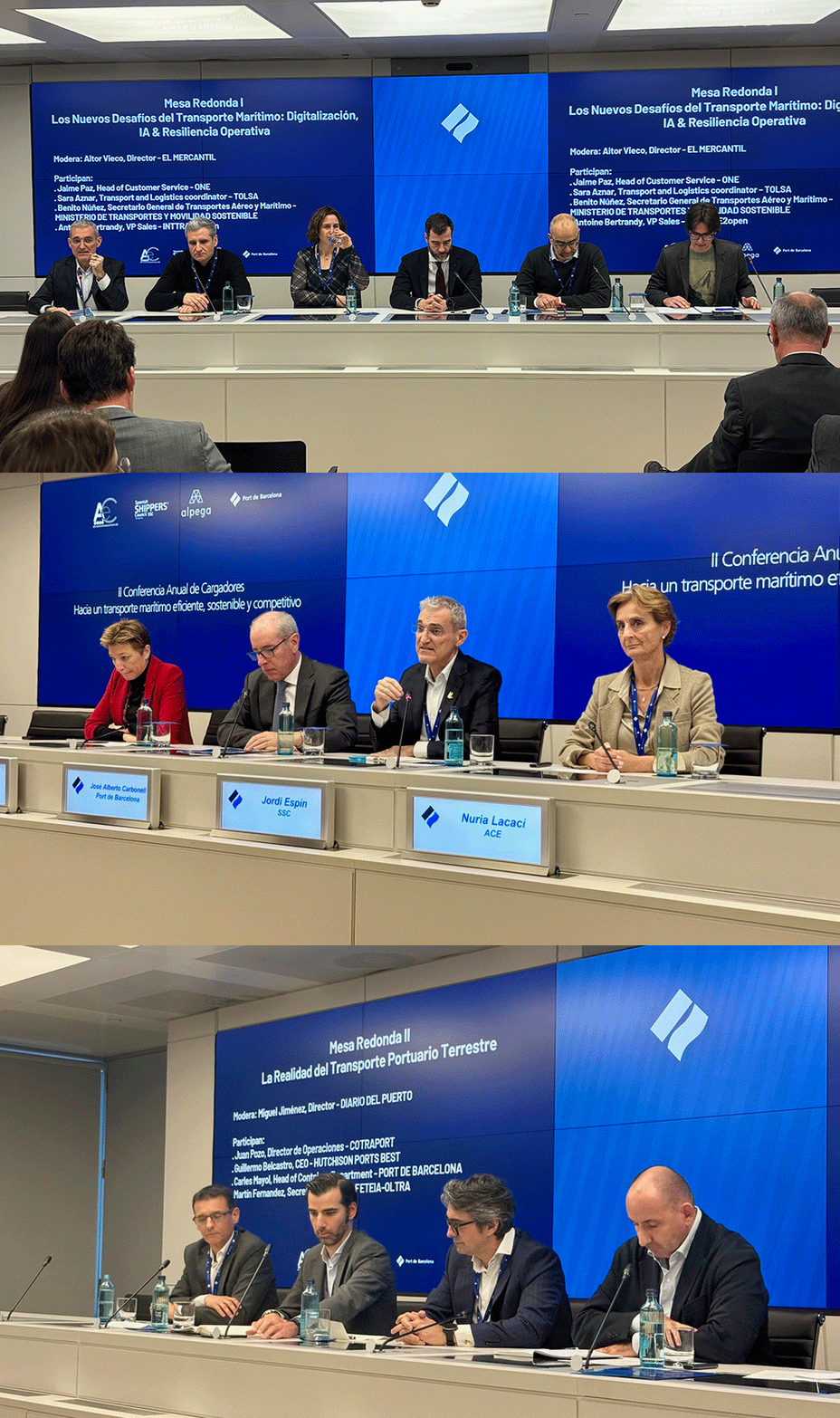
Efforts to share data and information among supply chain actors may become a pipe dream given the trends emerging from the global geopolitical landscape. Despite acknowledging that shared information and transparency are essential for efficient operations, the sector recognizes a scenario that may increasingly lean towards protecting data as a strategic asset. “My personal perception is that difficult times are ahead in this regard. Data ownership is becoming a priority, and that, precisely, suggests that much data sharing is unlikely,” predicted Benito Núñez, Secretary General of Air and Maritime Transport, during a shippers’ conference organized by the European Shippers’ Council and the Spanish Shippers Association (ACE) at the Port of Barcelona.
Núñez was responding to the demands of a shippers’ sector that aspires to greater transparency and predictability from its transport operators. The demand, in the maritime supply chains and logistics in general, is not new, nor is the recognition that a lack of information determines many of the inefficiencies the business faces globally. However, the role of foreign trade in current geopolitical tensions, as well as the tariff climate, paints a picture more characterized by mistrust than by multilateral affinities between actors. “Data ownership is gaining importance not only in terms of security. Artificial intelligence (AI) also requires a huge amount of data. The value is no longer in designing a new AI tool, but in who has the data to feed it,” continued the representative from the Ministry of Transport and Sustainable Mobility.
Without going that far, Antoine Bertrandy, Vice President of Sales at the technology platform INTTRA (E2open), agreed that “there is still no vision for a centralized data exchange space. It will be difficult to create a truly large platform,” despite mentioning that there are plans in the European Union to generate shared data clouds for the EU markets. The executive emphasized the value of platforms like his, which “buys and sells data, but with the goal of achieving a win-win situation, the best outcome for both parties,” a resource that, in his opinion, “is proving sufficient for the time being.”
However, shippers lament a vulnerability in the very act of sharing data, precisely because of the lack of information they receive from other stakeholders. “What I want as a freight forwarder is that, if I share the data, I will have that resilience, stability, and I will reduce my costs because I will have real-time information about what is happening,” asserted the Transport and Logistics Coordinator for the mining company Tolsa. “I can share the data, but in exchange for my operations flowing smoothly and me being alerted to any problems,” she emphasized. The same debate also highlighted the vulnerability of European companies to external actors where information exchange is less difficult, which could be a veiled reference to Chinese business conglomerates with the involvement, support, or strategic interests of the Asian state.
THE DEMAND FOR MORE COMMUNICATION IS REPEATED IN THE INTRA-PORT ECOSYSTEM
The importance of better communication across the links of the logistics chain was echoed in a second panel discussion at the event, this time among stakeholders in intra-port transport. Faced with operational inefficiencies, Guillermo Belcastro, CEO of the BEST terminal in Barcelona (Hutchison Ports), pointed to a “knowledge gap” between the shipper and the terminal, which “can only be reduced by using data.” Belcastro called for addressing these communication breakdowns by “working together.” Carles Mayol, head of the Containers Department at the Port Authority of Barcelona, echoed this sentiment, noting that the port authority is trying to facilitate these types of processes within the port’s business community. Meanwhile, Juan Pozo, Operations Director at Cotraport, emphasized the problems faced by trucks at the port when someone in the supply chain alters information about a delivery without informing the others.